• 239 Boston Street, Topsfield, Massachusetts 01983
  • [Email us]

Life Transition Therapy: A Guide to Handling Life’s Big Moments

Life transitions can be challenging and overwhelming, whether it’s a career change, divorce, or the loss of a loved one. Life transition therapy is an effective approach to navigating these significant changes, providing support and guidance along the way. In this blog, we will explore what life transition therapy is, its benefits, and practical steps to harness its power during tough times.

Understanding Life Transition Therapy
Life transition therapy is a specialized form of therapy that focuses on helping individuals navigate significant changes in their life. These transitions can range from career shifts and relationship changes to major life events like moving to a new city or coping with loss. In this therapy, a trained licensed professional guides clients through their emotional responses and helps them develop coping strategies to manage these changes effectively.

The primary goal of life transition therapy is to provide a safe space for individuals to express their feelings and thoughts about the changes they are experiencing. This therapeutic environment encourages self-reflection and facilitates the exploration of one’s emotions in a way that can be deeply healing. Often, it can help individuals understand that while change can be daunting, it also presents opportunities for growth and new beginnings.

Common Life Transitions and Their Impact
Life is filled with transitions, some expected and others quite sudden. Common transitions include retirement, the end of a long-term relationship, or even the arrival of a new baby. Each of these events carries its unique set of emotions. For instance, while retirement might initially be associated with freedom, it can also lead to feelings of loss and a questioning of one’s identity.

Moreover, transitions can significantly impact mental health. Feelings of anxiety, sadness, or even confusion are typical responses. Understanding these emotional impacts is essential. When an individual is facing a divorce, for example, the emotional turmoil can leave them feeling isolated. Life transition therapy aims to address these feelings, allowing individuals to process them in a constructive manner.

Recognizing the breadth of these transitions invites a deeper understanding of how life events shape our psychology. It’s crucial to note that every transition may affect people differently, influencing their mental, emotional, and even physical well-being. Being aware of these differences allows individuals to tailor their approach to seeking help and support.

How Life Transition Therapy Works
At its core, life transition therapy operates on the principle of assisting individuals in identifying their struggles and coping with them effectively. The process usually begins with an initial assessment, where the therapist gains insight into the client’s background, current situation, and specific transitions they are facing. This collaborative relationship allows clients to feel supported and understood as they navigate their journey.

Once a therapeutic alliance is established, sessions may involve various techniques aimed at facilitating emotional processing. This may include Cognitive Behavioral Therapy (CBT) techniques, which help individuals recognize and challenge negative thought patterns that arise during transitions. By reframing these thoughts, clients can cultivate a more positive or realistic outlook and enhance their resilience.

Additionally, mindfulness practices may also be incorporated into sessions, enabling clients to stay present and grounded amid the chaos of change. Practicing mindfulness can help individuals manage anxiety and become more attuned to their feelings, empowering them to respond rather than react to their circumstances. This can greatly improve one’s quality of life by enhancing relationships and self-esteem. A comprehensive approach such as this makes life transition therapy a truly effective tool for navigating change.

Benefits of Life Transition Therapy
Life transition therapy comes with a plethora of advantages that help individuals thrive amidst change. Firstly, it offers a structured setting where clients can explore their feelings without judgment. This facilitative environment is critical, as it allows for greater emotional expression, paving the way for healing and understanding.

Another significant benefit is the development of coping strategies and resilience. Through therapeutic techniques, individuals learn to approach transitions with a mindset focused on growth and adaptation. They can cultivate patience with themselves during challenging times, fostering a healthier relationship with their feelings and themselves. As clients learn to navigate their emotions, they also build confidence in their ability to tackle future challenges.

Furthermore, life transition therapy encourages a deeper understanding of one’s values, priorities, and goals. As individuals reflect on their experiences, they are often prompted to reassess what truly matters to them. This greater sense of self-awareness can facilitate meaningful change and empower individuals to make choices aligned with their authentic selves.

Finding the Right Therapist for Your Needs
Finding a therapist who specializes in life transition therapy can seem daunting, but it’s crucial to ensure a good fit. A quality therapeutic relationship is one of the strongest predictors of success in therapy. Start by researching therapists in your area or online who include life transitions as part of their clinical focus. Pay attention to their credentials, ensuring they are licensed and board certified and ask about their experience in dealing with the specific change you are experiencing.
It’s also wise to schedule initial consultations with a few different professionals. This can provide an opportunity to gauge compatibility and discuss their therapeutic approaches. During these consultations, don’t hesitate to ask questions about their methods and how they would approach your unique situation. This dialogue empowers you to take charge of your therapeutic journey.

Finally, trust your intuition. Pay attention to how you feel when speaking with a potential therapist. Feeling understood and accepted is vital. If something doesn’t feel right, it’s okay to keep searching. The right therapist can serve as a guide through the complexities of life transitions.

Practical Steps to Take During a Transition
Navigating life’s transitions can be overwhelming, yet there are practical steps you can take to help ease the process. One of the first steps is to acknowledge your feelings. Avoiding emotions can lead to greater distress over time. Instead, allow yourself to feel what you’re feeling—whether it’s sadness, anger, or relief. These emotions are valid and deserve recognition.
Creating a supportive network is equally important. Reach out to trusted friends or family members who can provide a listening ear. Sharing your experience can lighten the burden and remind you that you’re not alone. Connecting with others during transitions can foster solidarity and offer new perspectives.

Additionally, consider establishing a routine. During times of change, structure can provide a sense of normalcy. Whether it’s setting small daily goals or maintaining regular schedules, creating a predictable pattern can help ground you in uncertain times. Lastly, don’t hesitate to seek professional support via life transition therapy. It’s a proactive step that can facilitate healing and growth.

Success Stories: How Therapy Helped Others
Numerous individuals have found empowerment and clarity through life transition therapy. For instance, one woman faced a challenging divorce that left her feeling lost and uncertain about her future. After engaging in therapy, she discovered tools to regain her self-confidence and redefine her goals. With support, she transformed her anxiety into a renewed sense of purpose.

Similarly, a teen who faced the unexpected loss of a parent, found solace in therapy. The safe space allowed her to process his grief, find closure, and slowly rebuild her life. Through guidance, she learned to celebrate her parent’s legacy while creating new memories.

These success stories highlight the transformative power of life transition therapy. Each journey is unique, but they all reveal how support during difficult times can lead to growth and resilience. Whether it’s navigating loss, career changes, or relationship adjustments, therapy can be the guiding light individuals need.

Embracing Change with Support
Navigating life’s transitions is never easy, but with the right tools and support, you can emerge stronger and more resilient. Life transition therapy offers a valuable resource for those struggling to cope with change. Remember, it’s okay to seek help during challenging times—it’s a sign of strength, not weakness.

Why Do I Have Anxiety?

Anxiety is a normal part of life, but when it becomes overwhelming or constant, you might find yourself asking, “Why do I have anxiety?” Understanding the psychological, social, and environmental factors that contribute to anxiety can help you identify whether you’re dealing with everyday anxiety or an anxiety disorder—and more importantly, when it’s time to seek help. The good news is that anxiety disorders are treatable, and with the right therapy, you can regain control and feel better.

Psychological Factors Behind Anxiety
At its core, anxiety is a natural response to stress. However, certain psychological factors can make some individuals more prone to experiencing it intensely or frequently. For example:

Genetics: If you have a family history of anxiety disorders, you may be more likely to develop one yourself. Research shows that anxiety can run in families, suggesting a genetic component.

Personality Traits: People who are more perfectionistic, self-critical, or prone to overthinking may be at a higher risk of developing anxiety. Traits like a tendency to worry about the future, fear of failure, or a constant need for control can trigger anxious thoughts and sensations.

Trauma: Past experiences of trauma, especially during childhood, can lead to persistent feelings of fear and worry often connected to a core belief along the lines of “I am not safe” or “Something is wrong with me”. Events such as abuse, neglect, or witnessing violence can cause the brain to be in a heightened state of alert, leading to anxiety.

Social and Environmental Causes of Anxiety
Anxiety doesn’t only stem from internal factors—our environment plays a big role as well. Some common social and environmental causes include:

Stressful Life Events: Major changes like moving, starting a new job, financial problems, or the loss of a loved one can trigger anxiety. Even events traditionally viewed as “positive”, such as getting married or having a baby, can cause stress that leads to anxiety.

Social Pressure: Constantly feeling judged or the need to meet societal expectations can create anxiety, especially in teenagers and young adults who are navigating their identity and future.

Work and School Stress: Demanding schedules, deadlines, and competition can create a high-pressure environment where anxiety thrives. In some cases, this can be a normal response to stress, but if it feels persistent and unbearable or causes you to avoid certain situations, it could indicate a deeper issue.

Anxiety Disorder or Everyday Stress?
Everyone experiences anxiety from time to time, but how do you know if it’s a disorder? The difference between everyday anxiety and an anxiety disorder often lies in the severity, frequency, and impact on daily life. Here are some signs that may indicate your anxiety is more than just situational:

Constant Worry: Feeling anxious most of the time, even when there’s no clear reason or immediate threat.
Physical Symptoms: Anxiety disorders can manifest physically, with symptoms like rapid heartbeat, shortness of breath, sweating, or dizziness.

Avoidance: Avoiding places, situations, or activities due to fear of feeling anxious. This can include avoiding social gatherings, work, or school.

Impaired Functioning: When anxiety interferes with your ability to perform daily tasks, maintain relationships, or focus at work or school, it could indicate an anxiety disorder.

Can My Anxiety Get Better?
Yes! The most important thing to understand about anxiety disorders is that they are treatable. With the right therapy and treatment plan, you can learn to manage and reduce your anxiety. A licensed therapist, especially one specializing in anxiety disorders, can work with you to identify triggers and develop coping strategies.

Common treatments include:

Cognitive Behavioral Therapy (CBT): CBT is one of the most effective therapies for treating anxiety. It helps individuals recognize and change unhelpful and distorted thought patterns that contribute to anxiety.

Eye Movement Desensitization and Reprocessing (EMDR): Originally developed for trauma, EMDR is also effective for treating anxiety by helping people process distressing memories and thoughts. Through guided eye movements, individuals can reduce the intensity of anxious feelings associated with past experiences and also explore their origins in a more gentle way than some other trauma therapies might.

Somatic Therapies: Somatic therapy focuses on the connection between mind and body. It helps individuals release stored tension and anxiety by paying attention to physical sensations and using techniques like deep breathing, grounding, and movement to calm the nervous system.

Exposure Therapy: This approach helps people face their fears in a controlled environment, reducing anxiety over time.
Mindfulness and Relaxation Techniques: Learning mindfulness can help you stay grounded in the present, reducing anxious thoughts about the future or past.

Medication: In some cases, medication such as antidepressants or anti-anxiety drugs may be prescribed to help regulate brain chemistry and reduce symptoms.

Conclusion
If you’ve ever asked yourself, “Why do I have anxiety?” It’s important to recognize that many factors—both internal and external—can contribute to anxiety. While feeling anxious from time to time is normal, persistent anxiety that interferes with daily life may be a sign of an anxiety disorder. Remember, anxiety disorders are highly treatable with therapy treatment. Whether you’re struggling with everyday stress or a more severe form of anxiety, know that help is available, and you can start feeling better with the right support. Click on the “Contact” page of this website to reach out today to schedule a free 15 minute consultation with Sarah Haugh, LMHC a licensed mental health therapist specialized in treating anxiety disorders in teens and women to learn if therapy is the right fit for you or a loved one.

Understanding Adult Attachment Styles and Their Impact on Relationships

Our attachment style, shaped in early childhood, plays a pivotal role in how we form and maintain relationships as adults. Understanding these attachment styles can provide insight into the dynamics of our personal and romantic relationships, offering a pathway to healthier interactions and personal growth. In this article, we’ll explore the four main adult attachment styles—secure, anxious, avoidant, and disorganized—and how they impact relationships. Whether you’re struggling with anxiety, trauma, or simply looking to improve your mental health, recognizing your attachment style can be a valuable first step. If you’re seeking support, North Shore Professional Therapy can offer experienced therapists to guide you via virtual therapy specializing in teens and women.

What Are Adult Attachment Styles?
Attachment theory, originally developed by psychologist John Bowlby, explains how the bond between a caregiver and child affects the way we connect with others throughout life. As adults, our attachment style influences how we relate to romantic partners, friends, and even our children. Let’s break down each style.

1. Secure Attachment Style
A person with a secure attachment style typically feels comfortable with intimacy and emotional closeness. They are able to form strong, healthy relationships without fear of abandonment or dependency. As adults, securely attached individuals are generally able to balance independence with the need for connection.

How It Appears in Relationships:
Comfortable with emotional and physical closeness.
Openly communicates needs, feelings, and boundaries.
Maintains trust in the relationship even when separated from their partner.
Responds to conflict with calmness and problem-solving rather than anxiety or avoidance.

Self-Help Tip:
If you lean towards a secure attachment style, focus on maintaining open communication and continue to nurture the emotional connection in your relationships.

2. Anxious Attachment Style (Preoccupied)
People with an anxious attachment style often seek constant reassurance in their relationships. They may fear abandonment or feel insecure about their partner’s love and commitment. This attachment style can stem from inconsistent caregiving in childhood, where emotional needs were sometimes met and sometimes neglected.

How It Appears in Relationships:
Craves intimacy and approval, sometimes to an overwhelming degree.
Experiences anxiety when separated from their partner or when communication is less frequent.
Overanalyzes partner’s actions, interpreting neutral events as signs of rejection.
May become clingy, possessive, or jealous.

Self-Help Tip:
If you recognize anxious attachment traits, practice mindfulness and self-soothing techniques to calm anxious thoughts. Working with an experienced therapist can also help address underlying anxiety and build self-confidence.

3. Avoidant Attachment Style (Dismissive)
Individuals with an avoidant attachment style tend to prioritize independence and may shy away from emotional closeness. In childhood, they likely experienced caregiving that was emotionally distant or unavailable, leading them to become self-reliant and uncomfortable with vulnerability.

How It Appears in Relationships:
Prefers emotional distance and may avoid intimacy.
Feels uncomfortable with dependency, either giving or receiving it.
May have difficulty expressing emotions or empathy.
Tends to downplay the importance of relationships or commitment.

Self-Help Tip:
For those with an avoidant attachment style, it’s important to work on being more open about emotions. Virtual therapy with an experienced therapist can help you develop trust and practice vulnerability in a safe environment.

4. Disorganized Attachment Style (Fearful-Avoidant)
People with a disorganized attachment style often display conflicting behaviors. They crave intimacy but also fear it, leading to a push-pull dynamic in relationships. This style often develops as a result of trauma, neglect, or abuse in early childhood, creating confusion about how to approach relationships safely.

How It Appears in Relationships:
Experiences both a strong desire for closeness and intense fear of rejection.
May struggle with emotional regulation, leading to erratic or unpredictable behaviors.
Forms relationships that are often intense, chaotic, or unhealthy.
May feel both drawn to and fearful of their partner.

Self-Help Tip:
For individuals with a disorganized attachment style, therapy is especially important. Trauma-focused therapy can help address past wounds and develop healthier patterns for engaging in relationships. Virtual therapy can provide a safe space to begin healing.

How Attachment Styles Affect Anxiety and Mental Health
Your attachment style can significantly impact your mental health, particularly anxiety levels. For example, individuals with anxious attachment may experience heightened anxiety in relationships due to fears of abandonment, while avoidant individuals may feel isolated and disconnected, potentially leading to depressive symptoms. Recognizing these patterns is key to breaking cycles of stress and promoting healthier relationships.

When to Seek Therapy
If you’re noticing patterns in your relationships that leave you feeling anxious, disconnected, or unfulfilled, it may be time to consider therapy. A therapist can help you explore the roots of your attachment style, process trauma, and develop healthier relationship habits.

Why Virtual Therapy May Be a Good Fit
Virtual therapy offers flexibility and accessibility for those who may find it difficult to attend in-person sessions. Whether you’re managing a busy schedule or feel more comfortable speaking from home, virtual therapy can be just as effective in addressing attachment-related issues as in-person sessions. An experienced therapist can work with you to identify your attachment style, address the underlying causes of anxiety, and help you develop strategies for building healthier, more secure relationships.

Conclusion
Understanding your attachment style is an essential step toward improving your relationships and mental health. Whether you identify with secure, anxious, avoidant, or disorganized attachment, recognizing these patterns can help you navigate relationships with greater clarity and confidence. If you’re struggling with anxiety, trauma, or relationship difficulties, working with a therapist can provide the support and tools you need to heal and grow.

At North Shore Professional Therapy, we offer virtual therapy for teens and women, helping individuals across all attachment styles to thrive in their personal and romantic relationships. Reach out today to start your journey toward healthier, more fulfilling connections.

12 Myths About Counseling Services Debunked

Many people have misconceptions about counseling services that can prevent them from seeking the help they truly need. In this blog post, we will unravel some of the most common myths surrounding counseling and shed light on the reality of what these services offer. Knowledge is empowerment, and it’s time to break down the barriers built by misinformation.

1. Counseling is Only for Individuals in Crisis
One of the most prevalent myths about counseling services is the belief that they are exclusively for individuals experiencing significant crises. This misconception often leads people to think that counseling is only necessary when things have spiraled out of control. The truth is far more nuanced. Counseling can also be a proactive measure to strengthen emotional health and tackle everyday challenges.

Think of counseling like regular maintenance for your car. Just as you would take your vehicle in for oil changes or tire rotations to keep it running smoothly, individuals can use counseling services to navigate life’s ups and downs effectively. Many people find counseling beneficial for personal development, gaining clarity in decision-making, or even improving their relationships. Ignoring mental health until a crisis occurs can lead to unnecessary stress and turmoil.

Additionally, counseling offers a safe space for addressing various life transitions, like a career change or a move to a new city. If you find yourself juggling multiple roles or facing decisions that seem overwhelming, it may be time to explore counseling services. It’s about enhancing your emotional toolbox, not simply waiting for an emergency.

2. Counselors Can Solve Your Problems for You
Another significant myth is the notion that counselors have the power to solve your problems for you. Many individuals enter counseling with the expectation that their therapist will provide clear-cut answers, but this perspective misses the essence of what counseling truly offers. Instead of offering simple solutions, counselors empower clients by helping them tap into their inner strength and devise strategies to overcome obstacles.

Counselors serve as guides, not problem-solvers. They use various techniques, such as active listening and targeted questioning, to encourage self-exploration and critical thinking. This process often leads to deeper insights and promotes personal growth. So, rather than waiting for a counselor to give you concrete solutions, approach your sessions with the mindset that you are embarking on a journey of discovery.

This myth can hinder people from engaging fully in the therapeutic process, so understanding this distinction is vital. Embracing your role in this partnership will foster a healthier, collaborative dynamic, leading to more meaningful outcomes.

3. All Therapists Use the Same Approach
Many assume that therapists all operate using a single, uniform methodology, but this couldn’t be further from the truth. The world of counseling services is diverse, with numerous approaches tailored to individual needs. From cognitive-behavioral therapy (CBT) to humanistic approaches, many therapists adapt their techniques based on the client’s unique circumstances and preferences. However, some therapists strictly adhere to one, or a limited amount of modals.

Each therapeutic approach is like a different flavor of ice cream; what works best for one person may not resonate with another. Some clients thrive on structured sessions, while others flourish in a more free-flowing environment. This variety means you can find a therapist whose style matches your comfort and needs, helping you feel more engaged in your therapeutic journey.

4. Going to Therapy Means You’re Weak
The misconception that seeking therapy is a sign of weakness can be one of the most damaging myths surrounding counseling services. In fact, the opposite is true: seeking help demonstrates strength and courage. Acknowledging one’s needs and reaching out for support is a vital step toward personal empowerment.

Contrary to the stereotype, therapy can be a transformative process that fosters resilience. The act of pursuing counseling shows a desire for improvement and growth. It’s crucial to recognize that everyone faces challenges, and asking for help should be seen as an essential part of the human experience, not a weakness.

When we normalize counseling as a supportive resource, we help reduce the stigma that often discourages individuals from seeking help. Instead of viewing therapy as a crutch, it should be seen as a tool for cultivating strength and self-awareness.

5. Only People with Severe Mental Health Diagnoses Need Counseling
Another pervasive myth is that counseling is exclusively for those grappling with severe mental health issues. While it is certainly valuable for individuals in crisis, this perception overlooks the myriad of benefits that counseling services can provide to anyone, regardless of their current mental state.

Counseling can also be a proactive measure for stress management, relationship enhancement, or personal development. Just as athletes engage coaches to elevate their performance, anyone can use counseling to enhance their emotional skills and resilience.

Many people choose to engage in counseling services simply to improve their overall quality of life. These discussions can lead to enriching conversations that promote self-reflection and growth, making counseling a worthy consideration for anyone.

6. Counseling is Just Talking and Doesn’t Provide Real Solutions
A common misconception is that counseling services are merely a means of talking about problems without any genuine progression. This view diminishes the value that structured counseling can bring. In reality, therapy is meticulously designed to encourage clients to unravel their emotions while simultaneously working toward actionable solutions.

Skilled counselors employ targeted techniques aimed at helping clients identify their goals, develop coping strategies, and effectively enact lasting change. This structured approach often results in tangible improvements in the client’s emotional and mental health.

Moreover, counseling is anchored in evidence-based practices that prioritize client outcomes. By adopting this informed approach, clients often find their insights lead to practical solutions that enhance their day-to-day lives.

7. You Must Share Your Entire Life Story in Therapy

Many individuals hesitate to pursue counseling due to the belief that they must divulge their entire life story to their therapist. This misconception can create unnecessary pressure and lead to avoidance of seeking help altogether. The truth is that sharing your life narrative in detail is not a requirement for successful therapy.

Counselors understand that everyone has their comfort levels when it comes to disclosure. Therapeutic sessions can focus on specific challenges or concerns, allowing clients to navigate their emotional landscapes at their own pace. You maintain control of what you share, and skilled therapists can guide the conversation without pressure.

This flexibility is vital in creating a comfortable environment where clients can explore their feelings without fear of judgment. It’s worth remembering that often, incremental sharing can lead to powerful breakthroughs.

8. Therapy is Too Expensive for Most People

Another widespread belief is that counseling services are prohibitively expensive for the average person. While it’s true that some therapy options may come with a price tag, this doesn’t hold true across the board. In many communities, there are accessible resources available, including sliding scale options and community clinics, which often lower costs.

Additionally, many insurance plans cover counseling services for out of network providers, making specialized therapists with a great deal of experience more affordable than anticipated. It’s worth exploring your options and seeking out therapists who align with your budget.

Investing in mental health isn’t merely an expense; it’s an investment in your overall well-being. Just as you would budget for routine health screenings, consider counseling as a necessary expense for emotional health.

9. Psychiatrists and Counselors Are the Same
A common misconception is that psychiatrists and counselors perform similar roles, both providing mental health support. However, these two professions serve distinctly different purposes in the mental health landscape. While both play an essential role in providing care, understanding their unique functions is key.

Psychiatrists are medical doctors who can prescribe psychotropic medication. In contrast, counselors primarily focus on talk therapy, and behavioral and somatic techniques aimed at addressing emotional and psychological challenges.

This distinction is crucial when seeking out the right type of help. Depending on your needs, you may prefer the supportive and conversation-driven environment provided by a counselor or the medical approach taken by a psychiatrist.

10. Counseling Only Focuses on the Past
The assumption that counseling services only delve into past experiences, creating a feeling of being stuck in old patterns, is another myth that can deter individuals from seeking help. Although understanding past events can certainly be part of the therapeutic process, modern counseling emphasizes finding solutions and building a more empowered future.

Many therapeutic approaches focus on addressing current challenges and developing actionable plans for the future. Counselors often guide clients in visualizing their goals and aspirations while identifying practical steps to achieve them, fostering a future-oriented mindset rather than solely dwelling on the past.

11. Once You Start Counseling, You Have to Go Forever
The myth that entering counseling means a lifetime commitment can be daunting and dissuade individuals from even starting. In reality, counseling can be tailored to fit your needs. While some clients may choose to engage in ongoing sessions, many find that a set number of meetings can provide the necessary tools to manage their challenges.

Many people use therapy as a temporary resource during particularly stressful periods or when navigating transitional phases in life. Once they feel equipped with strategies and insights, they may step back from weekly sessions while retaining the option to return if needed.

12. You Have to Attend Sessions in Person
The belief that counseling services must be conducted face-to-face is another myth that can limit access to care. Teletherapy has gained enormous popularity in recent years, offering clients greater flexibility and convenience. Whether due to distance, time constraints, or personal preference, many therapists now provide effective online sessions.

This accessibility means that individuals who may have previously felt isolated from mental health resources can now engage with professionals from the comfort of their homes. Teletherapy can also remove geographical limitations, allowing clients to find the right fit in terms of therapist expertise and approach.

Self-Help for Anxiety: Simple Strategies for Finding Peace

1. Identify Your Triggers:
Sometimes, the first step in managing anxiety is to identify the situations or thoughts that trigger your anxious feelings (this is not always the first step depending on your needs). This could be anything from public speaking to worrying about the future. Once you know your triggers, you can start to develop coping strategies to deal with them. Avoiding the anxiety producing situation can fuel anxiety. It is important to eventually expose yourself to anxiety producing situations once you have built up plenty of coping strategies to tolerate the discomfort.
2. Practice Mindfulness:
Mindfulness techniques can be highly effective in reducing anxiety. This involves focusing on the present moment and being aware of your thoughts and emotions without judgment. You can try simple mindfulness exercises like focusing on your breathing and noticing how it feels going into your body, body scanning (see resources section in my website for a free body scan meditation), or simply trying to name 5 things you see in your present moment. These can help calm your mind and find inner peace by helping you stay in the present moment, non-judgementally.
3. Exercise Regularly:
Physical activity has been proven to reduce anxiety and boost overall mood. Regular exercise can help release tension and stress, and also release feel-good hormones in your brain. Plus, with the added benefit of being good for your physical health, it’s a win-win.
4. Challenge Negative Thoughts:
Anxiety is often linked to negative thoughts and beliefs. When anxious, we tend to think worst-case scenarios and overestimate potential risks. To break this cycle, challenge your thoughts by asking yourself if they’re realistic or if there’s evidence to support them. Often, you’ll find that after this process, you may hold a more realistic and balanced thought that will help to reduce your anxiety symptoms. One thing to include here is normalizing the experience of anxiety for yourself as well. For example, before giving a presentation you may notice your thoughts saying “I am going to mess up, I am going to shake and tremble and people will think I do not know what I am talking about.” One way to challenge this thought is to ask “what evidence to I have that this will happen? Can I predict the future?” Further challenging can include remembering times that you were successful in sharing your thoughts and knowledge (even in smaller settings) and even thinking of the best case scenario. A more balanced thought could result of “I am only human. I am going to to do my best. It is okay that I feel anxious. Even if I shake, people may have compassion for me or relate. People may still be able to learn from my presentation.”
5. Connect with Others:
Having a strong support network is crucial for managing anxiety. Reach out to friends and family, or consider joining a support group. Talking to others who understand what you’re going through can be extremely helpful in reducing anxiety and promoting self-care.
Living with anxiety can be challenging, but remember, it is part of every humans existence. Anxiety is here to protect us. We simply must train our anxiety to recognize when we don’t need it, and help that part of us understand we are safe. With the right strategies, you can find peace and live a fulfilling life. Remember, it’s okay to seek professional help if you need it. You don’t have to go through this alone.
In conclusion, self-help for anxiety involves identifying triggers, practicing mindfulness, exercising regularly, challenging negative thoughts, and connecting with others. Above all else, remembering that anxiety is a natural part of life and recognizing when it is time to seek professional help is of the utmost importance. If you feel that your anxiety is mild, then you may find these strategies are all that you need to live the life you want. By implementing these techniques and seeking support when needed, you can take control of your anxiety and lead a happier, more peaceful life. Remember to be patient with yourself and celebrate small victories along the way. You deserve to live a life free from constant worry and fear.

Gentle Parenting versus Permissive Parenting: Two Very Different Parenting Styles that Should Not be Confused as the Same.

Introduction
Parenting styles can significantly impact children’s behavior and development. While we are all here parenting, trying the best we possibly can, I have noticed many parents in this generation are confused by social media accounts encouraging what appears to be “permissive parenting” strategies and mislabeling it as “gentle parenting”. Permissive parenting can have troubling consequences for youth as they age into their teenage years and beyond. Gentle parenting should not be confused with it. While they may seem similar at first glance, gentle parenting, and permissive parenting styles have distinct differences and outcomes. This article will compare these two parenting styles and provide tips for parents who wish to embrace gentle parenting without crossing into permissiveness.

What is Gentle Parenting?
Gentle parenting is a modern approach that focuses on nurturing, respect, and emotional support while guiding children’s behavior. It emphasizes understanding children’s feelings and fostering a warm relationship built on trust, empathy, and communication.

Core Principles of Gentle Parenting:
Understanding and Empathy: Recognizing and validating a child’s feelings.
Setting Boundaries: Providing clear guidelines while respecting the child’s autonomy.
Positive Reinforcement: Encouraging good behavior through praise and support.
Modeling Behavior: Demonstrating the behaviors and values you want to instill.
Example of Gentle Parenting: If a child throws a tantrum because they can’t have a cookie before dinner, a gentle parent might kneel down to the child’s level, acknowledge their disappointment, explain why dinner is important, and offer a healthy snack instead.

What is Permissive Parenting?
Permissive parenting is characterized by a lenient, indulgent approach, where parents are more likely to give in to their children’s demands and avoid setting firm boundaries. While permissive parents may have good intentions and want to be friends with their children, this style can lead to issues such as a lack of self-discipline and poor decision-making skills.

Core Characteristics of Permissive Parenting:
Minimal Rules: Few limits on the child’s behavior, allowing them to make most decisions.
Inconsistent Discipline: Rarely enforcing consequences for poor behavior.
Emphasis on Freedom: Overly granting children the freedom to choose without guidance.
Example of Permissive Parenting: If a child insists on eating candy for dinner, a permissive parent might agree, prioritizing their child’s immediate happiness over health or nutrition.

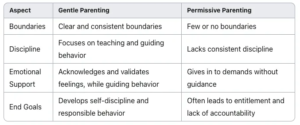
Key Differences Chart:

Tips for Implementing Gentle Parenting Without Being Permissive
Establish Clear Boundaries: Set age-appropriate expectations and be consistent in enforcing them. Explain to your child why these rules matter, ensuring they understand the reasoning behind boundaries.
Use Positive Language: Instead of saying what not to do, frame your rules positively. For example, “Let’s use our inside voice,” instead of “Don’t shout.” this does not mean you can not ever say “no”. “No” is an important word to learn to cope with. However, when possible, find the opposite “yes” also. For example “Markers are for coloring on paper. Markers are not for coloring on the table.”
Offer Choices: Empower your child by giving them choices within set limits. For instance, “You can choose between carrots or cucumber slices for a snack.” This encourages independence while maintaining guidance.
Stay Calm During Tantrums: This is easier said then done of course, but all one can do is try! When your child has a meltdown, stay calm and reassuring. Acknowledge their feelings but also gently remind them of the boundaries you’ve established.
Teach Problem-Solving: Instead of just saying “no,” encourage your child to come up with alternatives. For example, if they want to play a video game after school, ask them, “What’s a good time to play, and what else should you finish first?”
Model Self-Regulation: Show your child how to handle emotions by discussing your feelings and demonstrating healthy coping mechanisms. This teaches them to navigate their emotions without resorting to tantrums.
Praise Effort, Not Just Results: Encourage your child’s attempts to follow boundaries and make good choices. This reinforces their desire to behave positively without depending solely on external validation.

Conclusion
Gentle parenting promotes a nurturing approach to raising children while setting necessary boundaries. By being mindful of the differences between gentle and permissive parenting, parents can create a supportive environment that encourages a child’s emotional and social development. Implementing gentle parenting principles thoughtfully will help children develop self-discipline, responsibility, and resilience without falling into permissive habits that could have negative outcomes. Parenting is hard work; no one will get it right daily. We are doing the best we can with the information we have at any given time, and also taking into account our tolerance for frustration and over-stimulation. All we can do is try and remember that each and every day is new! And above all else, we absolutely must take care of ourselves.

How Can Counseling Services Help Me?

Counseling services offer a variety of benefits tailored to your needs and challenges. Whether you’re dealing with personal issues, emotional distress, or relationship problems, professional counselors can guide you towards solutions. This blog will explore how counseling services can positively impact your life and help you achieve your goals.

Understanding What Counseling Services Are
Counseling services are professional support systems designed to aid individuals facing various life challenges. From mental health issues to personal development, these services offer tailored assistance aimed at fostering growth and healing. At their core, counseling services involve one-on-one interactions between a trained counselor and a client. This relationship is built on trust, allowing clients to open up about their thoughts and feelings without fear of judgment.

Types of counseling include individual therapy, couples therapy, group sessions, and family counseling, each designed to address specific needs. Whether you’re grappling with anxiety, past trauma, or everyday stressors, there’s a counseling option for you.

Identifying Your Needs: When to Seek Counseling
Recognizing the right time to seek counseling can be a critical step toward improvement. If you find yourself often overwhelmed by emotions or struggling to cope with daily life, it may be a sign that professional help is needed.

Look for signs such as persistent nervous thoughts, withdrawal from social activities, or difficulty managing stress. These symptoms can indicate that it’s time to reach out for counseling services.

Remember, seeking help is not a sign of weakness; it demonstrates a proactive approach towards your mental well-being. Taking that first step toward counseling can lead to significant positive changes.

The Benefits of Professional Guidance
One of the primary benefits of counseling services is the personalized guidance offered by professionals. Each counselor brings a wealth of knowledge and experience, equipping you with tools to navigate your unique challenges.
In counseling, you will learn essential coping strategies that can enhance your resilience. Practical techniques, such as mindfulness and cognitive restructuring, help in managing anxiety and stress effectively.

Moreover, counseling provides a safe and supportive environment where you can express your thoughts freely. This emotional safety fosters personal insight and self-awareness, leading to a deeper understanding of oneself.
Additionally, consistent counseling sessions can improve your relationships. By enhancing your communication skills and emotional intelligence, you become more adept at resolving conflicts and nurturing connections.

What to Expect in Counseling Sessions
When you engage in counseling sessions, each meeting typically follows a structured format while allowing for flexibility based on your needs. Initially, you might discuss your history, current challenges, and goals for counseling.
As sessions progress, you’ll participate in guided discussions, exercises, and sometimes homework to deepen your insight.

Expect to set goals together with your counselor to track your progress.
It’s essential to understand that finding the right rhythm may take some time. Every individual processes information and emotions differently, and your counselor will work with you to find the most effective approach.

Finding the Right Counseling Service for You
The journey to finding the right counseling service can feel overwhelming, but it’s crucial for achieving the best outcomes. Start by researching different types of counselors available, such as psychologists, social workers, or licensed therapists/counselors.
Consider what matters most to you in a counselor. This could range from their specialty areas, such as trauma, anxiety, family dynamics, or personal development, to logistical factors like location, Telehealth or availability.

It’s often beneficial to schedule initial consultations with a few counselors to see who you feel most comfortable with. Remember, the right fit is essential for establishing a trusting and productive therapeutic relationship.
As you evaluate your options, don’t hesitate to ask questions about their approach, experience, and methodologies. Having this dialogue can greatly aid your decision-making process.

In Summary: Embracing the Journey with Counseling
Engaging with counseling services can be a transformative experience. They provide a safe space for exploration, support, and growth. As you navigate your challenges, remember that taking the step to seek help is a sign of strength.

Exploring Expressive Therapy: Techniques, Benefits, and Virtual Adaptations for Teens and Adults

Expressive therapy, also known as expressive arts therapy, is a powerful approach to mental health and personal growth that taps into creative processes to help individuals express emotions, explore thoughts, and manage challenges. This type of therapy can involve various art forms, including drawing, music, movement, writing, and drama. The versatility of expressive therapy makes it suitable for people of all ages, from teens to adults, and it can be practiced both in therapy settings or through self-exploration.

Types of Expressive Therapy

Art Therapy: This involves using visual arts (like drawing, painting, or sculpting) to express emotions that may be difficult to communicate verbally. It’s especially helpful for processing trauma, managing stress, and improving emotional well-being.
Music Therapy: Using music to help individuals express themselves, music therapy can involve listening to songs, playing instruments, or even writing music. It’s effective in reducing anxiety, improving mood, and fostering self-expression.
Dance/Movement Therapy: This form uses body movement as a way to connect with emotions and release pent-up energy. It can promote physical wellness while also improving mental health by helping individuals feel more in tune with their body and emotions.
Drama Therapy: Involves acting, role-playing, or storytelling to explore and resolve personal issues. It allows individuals to step into different roles, providing new perspectives on their lives and relationships and can even provide trauma healing with role-play what therapists call “corrective experiences”. This is when one can play out a better ending to their traumatic experience and regain some power over the situation.
Writing Therapy (Journaling, Poetry): Writing is a deeply personal form of expression that allows individuals to articulate feelings, thoughts, and experiences in a safe space. This can be through freewriting, journaling, or composing poems, stories, or letters.

Expressive Therapy: DIY vs. Working with a Therapist
While expressive therapy is often conducted with the guidance of a trained therapist, many of the activities can be adapted for personal exploration. Here’s how individuals can try these techniques on their own and when it may be helpful to seek professional support.

DIY Expressive Therapy Techniques:

Art Journaling: Use a sketchbook or blank notebook to visually express how you’re feeling. No artistic skill is required—it can be challenging, but try to let go of the need for perfection and focus on the process rather than the result.
Listening to or Creating Playlists: For music therapy, build playlists that reflect your emotions. Or, if you play an instrument, spend time improvising music that mirrors your mood.
Expressive Writing: Start a daily journal where you write stream-of-consciousness thoughts for a set period of time (e.g., 10 minutes). This helps with emotional release and processing. Many times, my clients are surprised where this leads them!
Movement Breaks: Take short breaks during the day to dance freely to your favorite music (clothes the shades if you feel embarrassed, but notice that you are feeling that way, be curious about that–journal about that even), or practice slow, mindful movements to feel more grounded.
When to Work with a Therapist:
Deep Trauma or Emotional Blockages: A therapist can help guide the process and create a safe environment for more intense emotional release.
For Reflection and Insight: A therapist can offer professional insight into the themes that arise during expressive therapy sessions, helping you understand patterns and underlying issues.
Accountability: If you’re struggling to commit to self-directed practice or need structured guidance, working with a therapist can provide consistency.
Life Interference: if you notice your symptoms are getting in the way of you being able to enjoy life or interfering with your work, school or family life, then it is likely a sign that you would strongly benefit from seeing an experienced therapist.

Virtual Expressive Therapy Techniques
With the growing use of technology in healthcare, many expressive therapy techniques can now be adapted for virtual settings, allowing greater flexibility and access to care. Below are some Virtual Tools for Expressive Therapy:

Digital Art: Online platforms and apps (like Procreate or even simple drawing tools) can be used for art therapy. Therapists might guide clients through creating digital art pieces that represent their emotions or experiences.
Music Sharing Platforms: Clients and therapists can create or share playlists through apps like Spotify, using music to reflect moods or connect emotionally.
Video-Based Dance Therapy: Movement sessions can be done over video calls, with therapists guiding participants through movements that align with their emotional states.
Virtual Journaling Platforms: Websites and apps that allow private journaling (like Penzu or Day One) can be used in expressive writing therapy, with prompts provided by the therapist.

Benefits of Virtual Expressive Therapy

Accessibility: Virtual therapy removes geographical barriers, making it easier for individuals to engage in therapy from the comfort of their own homes.
Flexibility: Virtual therapy can be more adaptable to different schedules, which is especially useful for busy teens and adults.
Comfort: For some, expressing emotions through creative mediums can feel safer when done in a familiar and comfortable environment.

How Expressive Therapy Works for Teens and Adults

Teens:
Expressive therapy is highly effective for teenagers because it provides a non-verbal outlet for emotions. Adolescents often struggle to articulate their complex feelings, especially when dealing with anxiety, depression, or trauma. Creative activities allow teens to externalize their emotions in a non-judgmental space, which can be more comfortable than talking therapy alone.

Additionally, teens are drawn to digital tools and art forms, making virtual adaptations of expressive therapy particularly effective.
For example, a teen dealing with social anxiety might find it easier to express their feelings through music or drawing than through direct conversation. Over time, they can build emotional awareness and resilience by engaging in these activities.

Adults:
For adults, expressive therapy can be a way to tap into emotions that are difficult to reach through traditional therapeutic methods. Adults often face stress, burnout, or unresolved trauma that has been buried for years. Expressive therapy allows them to reconnect with their inner selves, uncover repressed emotions, and find new ways of coping.

In both teens and adults, expressive therapy promotes emotional regulation, self-awareness, and personal insight. It helps individuals process their feelings without the pressure of finding the “right” words and provides a structured yet flexible approach to healing.

Conclusion
Expressive therapy is a versatile, creative approach that offers a wealth of benefits to both teens and adults. Whether done independently or with a therapist, these techniques help individuals unlock deeper emotional insights, manage stress, and promote overall well-being. Virtual adaptations of expressive therapy allow for even greater access, making it possible for more people to experience the healing power of creativity.

If you’re looking for a way to explore your emotions or gain insight into your mental health, expressive therapy may be a pathway worth exploring, whether online, in-person, or in your own creative space.

Navigating Anxiety Disorders: Understanding Symptoms, Treatment Options, and Self-Help Strategies

Anxiety disorders affect millions of people worldwide, causing significant distress and impacting daily life. Understanding these disorders, recognizing their symptoms, and exploring effective treatment options can empower individuals to manage their anxiety and reclaim their well-being. This article delves into the nature of anxiety disorders, available treatments, and practical self-help strategies grounded in Cognitive Behavioral Therapy (CBT).

What Are Anxiety Disorders?
Anxiety disorders are a group of mental health conditions characterized by persistent and excessive worry, fear, or unease. Unlike temporary feelings of anxiety, which everyone experiences from time to time, anxiety disorders involve ongoing and intense feelings that can interfere with daily functioning. Common types of anxiety disorders include:

Generalized Anxiety Disorder (GAD): Chronic and excessive worry about various aspects of life, often accompanied by physical symptoms like muscle tension and fatigue.
Panic Disorder: Recurrent and unexpected panic attacks—intense episodes of fear and discomfort that may include palpitations, shortness of breath, and dizziness.
Social Anxiety Disorder: Extreme fear of social situations and a persistent worry about being judged or embarrassed in social settings.
Specific Phobias: Intense fear of specific objects or situations, such as heights, spiders, or flying.

Recognizing the Signs and Symptoms
Identifying the signs and symptoms of anxiety disorders is crucial for seeking timely help. Common symptoms include:

Persistent Worry: Excessive and uncontrollable worry about everyday events or situations.
Restlessness: Feeling on edge, irritable, or experiencing difficulty relaxing.
Physical Symptoms: Rapid heartbeat, sweating, trembling, or gastrointestinal issues.
Avoidance: Steering clear of situations or places that trigger anxiety, which can limit personal and professional growth.

Effective Treatment Options
Treatment for anxiety disorders often involves a combination of therapeutic approaches designed to address both the psychological and physiological aspects of anxiety. Key treatment options include:

Counseling and Psychotherapy: Engaging in therapy with a trained mental health professional can help individuals understand their anxiety, develop coping strategies, and work through underlying issues. Cognitive Behavioral Therapy (CBT) is particularly effective, focusing on identifying and challenging negative thought patterns and behaviors associated with anxiety.However, at times, CBT is not enough and other more relational and inner work modalities are necessary to see true relief.
Medication: In some cases, medication may be prescribed to help manage symptoms. Antidepressants and anti-anxiety medications can help regulate mood and reduce anxiety levels. It’s important to work with a healthcare provider to determine the most appropriate medication and dosage.
Lifestyle Changes: Incorporating healthy lifestyle practices, such as regular exercise, a balanced diet, and adequate sleep, can support overall mental health and reduce anxiety symptoms.

Benefits of Virtual Counseling
Virtual counseling offers a convenient and flexible alternative to traditional in-person therapy. Benefits include:

Accessibility: Allows individuals to attend sessions from home, reducing the need for travel and making therapy more accessible.
Flexibility: Provides greater scheduling options, which can be particularly useful for those with busy or unpredictable schedules.
Continuity of Care: Ensures that therapy can continue seamlessly even if life circumstances change, such as relocating or experiencing mobility challenges.

Self-Help Tips Based on Cognitive Behavioral Therapy (CBT)
CBT is a well-established approach to managing anxiety, focusing on the relationship between thoughts, feelings, and behaviors. However, remember, there are times CBT will not be enough to bring full relief, particularly when one’s anxiety stems from deep childhood wounds. In these cases, it will be extremely important to work with a therapist who is skilled in anxiety and/or trauma disorders to obtain the clinical treatment necessary. Here are some self-help tips based on CBT principles:

Challenge Negative Thoughts: Identify and question irrational or unhelpful thoughts that contribute to anxiety. Replace them with more balanced and realistic thoughts.
Practice Mindfulness: Engage in mindfulness exercises to stay present and reduce excessive worry about the past or future. Techniques such as deep breathing and meditation can help calm the mind.
Set Realistic Goals: Break down tasks into manageable steps and set achievable goals. This can reduce feelings of being overwhelmed and build a sense of accomplishment.
Gradual Exposure: Face anxiety-provoking situations gradually and in a controlled manner. Start with less intimidating scenarios and gradually work up to more challenging ones.
Develop Coping Strategies: Identify and practice healthy coping mechanisms, such as relaxation techniques, physical activity, or engaging in hobbies, to manage stress and anxiety.

Taking the Next Step
Understanding and managing anxiety disorders involves a multifaceted approach that combines professional treatment, self-help strategies, and lifestyle adjustments. Whether you’re considering counseling, exploring virtual therapy options, or implementing CBT-based self-help techniques, taking proactive steps can lead to significant improvements in your mental health and overall quality of life.

If you or someone you know is struggling with anxiety, seeking help from a qualified mental health professional is a crucial step towards healing and recovery. By addressing anxiety with a comprehensive approach, you can work towards a more balanced and fulfilling life! And that is the best news after all.

Beyond Exhaustion: How the Mental Load Drives Moms to the Edge and How to Get Help

Do you feel weighed down by the mental load of managing your family, household, and career? Are you experiencing agitation, resentment, or even rage as a result? Most working moms are! This phenomenon, known as “mom mental load,” can lead to burnout and negatively impact relationships. However, counseling and therapy can be successful tools in managing this burden.
It’s no secret that mothers often bear the brunt of the mental load in a household. This can include remembering appointments, organizing schedules, making holiday memories, and planning meals and activities for the family. Even something seemingly simple (to the outside eye) such as scheduling family photos, ordering and sending holiday cards or planning a child’s birthday party involves over 10-20 many mental load steps! Add a career on top of that, and it’s no wonder many moms feel overwhelmed and exhausted. But the consequences of this mental load can have a ripple effect on not only the individual, but also their relationships with partners and children.
One of the most common effects of mom mental load is burnout. This refers to physical, mental, and emotional exhaustion caused by prolonged stress. It can manifest as fatigue, insomnia, anxiety, and difficulty concentrating. Left unaddressed, burnout can have serious consequences on one’s well-being and ability to function in daily life.
In addition to burnout, the burden of mental load can also lead to agitation, resentment, and even rage. As moms struggle to keep up with multiple competing demands, it can feel like they are carrying the weight of the world on their shoulders. Or, quite honestly, it can feel more like they are trying to solve a rubiks cube in under 10 seconds all while monkeys are jumping on your head, hungry screaming kids are banging pots and pans in your ears and all the while an earthquake is underway. All just to feel like you are still falling short. This can cause tremendous tension and strain in relationships with partners and children, leading to feelings of anger and frustration that leak out when they can no longer be repressed.
Fortunately, counseling can provide much-needed support and healing for individuals struggling with mom mental load. Virtual therapy, in particular, offers convenience and accessibility for busy moms. It allows for counseling sessions to take place from the comfort of one’s own home without the added stress of finding childcare or commuting to an office.
Individual therapy can help moms clearly identify missing needs, set boundaries, develop coping strategies and manage stress before it takes over your body viscerally and physically. This can not only prevent burnout and other physical complications, but can also improve overall well-being. Additionally, couples therapy can address communication issues and help partners share the mental load more equally. By involving partners in the therapy process, it can also strengthen relationships and alleviate tension and resentment by helping each partner feel heard and understood and advocate for getting their needs met.
In conclusion, managing the mental load is crucial for a mom’s health and relationships. Through counseling, individuals can learn many strategies to cope in productive ways that boost confidence and also help moms set boundaries and expectations that are more realistic and balanced. Don’t let mom mental load continue to take a toll on your well-being. Seek help today and take control of your life. Don’t you deserve this after all? For more information on counseling services, contact North Shore Professional Therapy today. Together, we can alleviate the mental load and improve overall happiness and harmony in the household.

Unlock the Power of Virtual Therapy for Your Teenage Girls: A Guide for Parents

In today’s digital age, virtual therapy has emerged as a vital resource for teens facing various mental health challenges, including anxiety, depression, and stress. With the rise of online counseling platforms, parents can help their teens access support from qualified specialists without the barriers of traditional therapy settings. This article explores the effectiveness of virtual therapy and provides essential insights for parents looking to empower their teens. As I was once a teenage girl, I can still feel the pressure and anxiety of trying to fit in while at the same time trying to figure out who I even was. Questions such as “Am I good enough?” and “Will anyone fall in love with me?” kept me up at night. This is one of the most difficult stages of development for girls. Academic and social pressures rise while insecurities grow as teens become more aware of themselves.

The Rise of Virtual TherapyVirtual therapy also known as teletherapy, allows teens to connect with licensed counselors through video calls, chat, or phone sessions. This approach has become increasingly popular due to its convenience and accessibility. Teens can attend sessions from the comfort of their homes, reducing the anxiety often associated with in-person visits.

Benefits of Virtual Therapy for Teens Accessibility:

Location: Virtual therapy breaks down geographical barriers, allowing teens in remote areas to access specialized counseling services. This is particularly beneficial for those who may not have local mental health resources specializing in teens.

Comfort: Many teens feel more at ease discussing sensitive issues from their own space. This comfort can lead to more open communication and a stronger therapeutic alliance with their counselor.

Flexibility: Online sessions offer greater scheduling flexibility, making it easier for teens to fit therapy into their busy lives, including school, extracurricular activities, and part-time jobs.

Anonymity: Some teens may feel anxious or embarrassed about seeking help. Virtual therapy provides a level of anonymity that can encourage more young people to reach out for support.

Keys to Successful Virtual Therapy: To increase the effectiveness of virtual theapy, parents should consider the following strategies:

Choose the Right Counselor: It’s essential to find a counselor who specializes in adolescent mental health. Look for professionals who have experience dealing with issues like anxiety, depression, and behavioral challenges in teens.

Create a Safe Space: Encourage your teen to find a quiet, private space for their therapy sessions. This environment can help them feel more secure and focused during discussions.

Set Goals Together if your teen is open to this: Collaborate with your teen and their counselor to set clear, achievable goals for therapy. This can help track progress and keep the sessions productive.

Be Clear that you Respect your Teens Privacy: Reminding your teen that what they choose to share in their personal therapy sessions is confidential and that the counselor will not be sharing this information with you. This will allow them to feel more free to share what is really at the root of their struggles and target the right interventions and goals for treatment.

The Role of Parents and Caregivers: Parents play a crucial role in supporting their teens during the therapy process. It’s important to foster an environment where mental health is openly discussed and prioritized. Additionally, parents should educate themselves about the nature of virtual therapy and its benefits, enabling them to better support their teens’ journey.

Conclusion:
Virtual therapy offers a promising avenue for teens to receive the counseling they need, particularly in times of increased anxiety and stress. By leveraging technology, parents can help their teens connect with specialists who provide valuable support in a comfortable and accessible manner. With the right counselor and a supportive environment, virtual therapy can lead to meaningful progress and improved mental health for adolescents. ​​I know I wish this was available to me as teen. I believe that I would have then developed the tools I needed to explore my boundaries socially and romantically and felt empowered to advocate for myself at times that I desperately needed to.

The Power of Self-Compassion in Healing Childhood Wounds: A Psychological Perspective

Childhood experiences shape our personalities, relationships, and emotional well-being in profound ways. While many childhood experiences are positive and nurturing, others can leave deep wounds that continue to affect us well into adulthood. These wounds might stem from neglect, abuse, bullying, or various forms of trauma. While traditional psychological approaches, such as counseling, often focus on understanding and processing these past events, a growing body of research highlights the importance of self-compassion as a powerful tool for healing.

Understanding Childhood Wounds

Childhood wounds are often described as emotional or psychological injuries that occur during early developmental years. These experiences can leave lasting imprints on our self-esteem, relationships, and overall mental health. The inner child, a concept often used in therapeutic and counseling contexts, represents the part of us that holds these past traumas, fears, and unmet needs. When these wounds go unaddressed, they can manifest as anxiety, depression, self-doubt, and difficulties in forming healthy relationships.

Traditionally, therapy and counseling have focused on identifying these wounds, understanding their origins, and working through the associated feelings and proving corrective experiences. While these approaches are beneficial, they often emphasize revisiting painful memories without necessarily providing tools to cultivate a compassionate relationship with oneself. This is where self-compassion comes into play as a transformative healing practice.

What is Self-Compassion?

Self-compassion, as defined by psychologist Kristin Neff, involves treating oneself with the same kindness, concern, and understanding that one would offer to a good friend. It encompasses three main components:
1. Self-Kindness vs. Self-Judgment: Being gentle and understanding with oneself rather than harshly critical.
2. Common Humanity vs. Isolation: Recognizing that suffering and personal failure are part of the shared human experience rather than feeling isolated or alienated by one’s struggles.
3. Mindfulness vs. Over-Identification: Being present with one’s painful emotions without suppressing or exaggerating them, allowing a balanced approach to understanding and accepting these emotions.

The Role of Self-Compassion in Counseling and Healing Childhood Wounds

1. Creating a Safe Space for Emotional Healing

Self-compassion helps create an inner environment where one feels safe to confront and process painful childhood memories. Instead of turning away from discomfort or criticizing oneself for having these feelings, self-compassion allows for a gentle and accepting approach. This safe space is crucial for healing because it reduces the fear of confronting difficult emotions, allowing them to be processed rather than repressed. Counseling professionals often use self-compassion techniques to help clients feel secure in exploring difficult emotions.

2. Reparenting the Inner Child

Self-compassion allows adults to “reparent” their inner child. Many of the wounds we carry stem from unmet needs for love, security, and validation in childhood. By cultivating a compassionate relationship with oneself, an adult can provide the love, understanding, and reassurance that was lacking in childhood. Counseling often focuses on this reparenting process, helping clients to develop self-compassionate practices that soothe the inner child and foster a sense of inner safety and belonging.

3. Reducing Self-Criticism and Building Self-Esteem

Childhood trauma often leads to negative self-beliefs, such as feeling unworthy or unlovable. These beliefs can manifest as harsh self-criticism in adulthood, reinforcing feelings of inadequacy and shame. Self-compassion helps counteract these tendencies by promoting a kinder and more understanding inner dialogue. Over time, this can help to rebuild self-esteem and foster a more positive self-image. Counselors use self-compassion as a strategy to help clients challenge negative self-talk and develop a healthier self-concept.

4. Fostering Emotional Resilience

Research shows that self-compassion is linked to greater emotional resilience, the ability to cope with adversity, and bounce back from setbacks. For individuals healing from childhood wounds, cultivating self-compassion can help them navigate difficult emotions, reduce the intensity of emotional pain, and promote a greater sense of stability and strength in facing life’s challenges. Incorporating self-compassion practices in counseling can support emotional resilience by providing clients with tools to manage stress and adversity.

5. Encouraging Growth and Positive Change

While self-compassion involves accepting oneself as one is, it also encourages growth and change. By acknowledging our suffering with kindness, we become more motivated to make positive changes, whether that involves setting boundaries, seeking counseling, or engaging in practices that promote mental and emotional well-being.

Practical Steps to Cultivate Self-Compassion

1. Practice Mindful Self-Talk: Notice when you are being self-critical. Instead of saying, “I’m such a failure,” try saying, “I’m struggling right now, and that’s okay.” Reframe negative thoughts with kind and understanding language.
2. Engage in Loving-Kindness Meditation: This meditation practice involves directing kindness and compassion towards oneself and others. Counseling professionals often recommend loving-kindness meditation as a way to build a habit of self-compassion.
3. Write a Self-Compassionate Letter: Write a letter to yourself from the perspective of a compassionate friend. Reflect on your pain, acknowledge your feelings, and offer words of comfort and understanding.
4. Embrace Common Humanity: Remind yourself that you are not alone in your suffering. Everyone has their own struggles and challenges. This realization can help reduce feelings of isolation and foster a sense of connection with others.
5. Seek Professional Guidance: For many, working with a counselor or therapist trained in self-compassion and mindfulness-based approaches can be incredibly beneficial. Counseling provides tools, guidance, and support to help individuals cultivate self-compassion in a structured and safe environment.

Conclusion

Healing from childhood wounds is a complex and deeply personal journey. While traditional therapy and counseling offer essential insights and tools, integrating self-compassion can provide a powerful complementary approach. By fostering a kinder, more accepting relationship with oneself, individuals can create a fertile ground for genuine healing and transformation. In recognizing our shared humanity, acknowledging our suffering, and treating ourselves with gentleness and care, we open the door to healing and reclaim the parts of ourselves that may have been lost, forgotten or exiled. Through self-compassion, we begin to heal from within, allowing our inner child to finally feel safe, heard, and loved. Isn’t that simply amazing?